Showing posts with label activities. Show all posts

Tuesday, June 7, 2016

Off the Beaten Path: Excursions in Panama!


Panama is a beautiful country full of diverse landscapes, adventure, and amazing outdoor activities. Our excursions are designed to make the most out of all the exciting things Panama has to offer from tours of Panama City, to visiting the Panama Canal, to zip lining through the jungle. In addition, the excursions will take you to unique places and introduce you to parts of Panama most tourists will never have to opportunity to experience. Here are just a few of my favorite off the beaten path Panama excursions.

Coclé

The first excursion I went on in Panama was to Coclé, a region in the interior of the country just a few hours from Panama City. We boarded the bus bright and early and stopped for a delicious Panamanian breakfast before visiting Natá de los Caballeros (the oldest surviving town in Panama) to tour a nearby archaeological dig site. The next stop on our trip was a rice farm. I thought a rice farm sounded a bit boring, but it ended up being the best part of the day! The family that owned the farm invited us into their home for a delicious lunch before showing us around the rice fields. After learning a lot about rice (which is actually really interesting!) we headed back to their house where we relaxed in hammocks and played with some cute puppies. To end the day, we went horseback riding around the farm and enjoyed the countryside scenery.

Embera Village

One of the most incredible experiences of my life was visiting the Embera tribe on an excursion. After making our way down a bumpy dirt road, we climbed into handmade dugout canoes and headed into the jungle. We meandered our way upstream and finally made it to the Embera village, still untouched by the modern world. We toured the village, which consisted of about a dozen huts, and learned about the Embera culture through song and dance. For lunch, we had fresh fish and plantains cooked over a fire and served on a banana leaf. After spending the afternoon in the village, we climbed back into the canoes and began our journey out of the jungle and back to Panama City. It was such a unique and eye opening experience, we couldn't stop talking about it for weeks!

El Valle

El Valle is a popular mountain town located in an ancient volcanic crater about 2 hours from Panama City. We left early and stopped for some roadside breakfast before beginning our first activity of the day: horseback riding through the mountains. The scenery was absolutely amazing, and even though our horses had some attitude, we had a great time. The next stop on our trip was the El Valle Zoo where we got to hang out with some monkeys, sloths, and the endangered Panamanian Golden Frog. After lunch in town, we set off to the mountains where we hiked to a waterfall. Afterwards, we headed to our last stop of the day, the hot springs, where we relaxed after our hike and got to try some weird volcanic face masks. We enjoyed El Valle so much that we ended up going again a few months later!
Pedasí

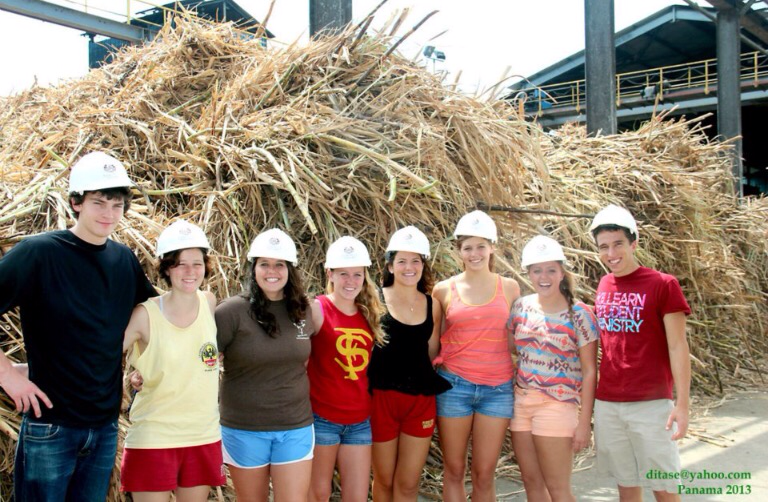
Pedasí is a quaint town located on the Azuero Peninsula about 5 hours from Panama City. This excursion was 3 days/2 nights and was one of my favorites because of the wide variety of activities we did. We left Panama City super early Friday morning and headed to our first stop, the Ron Abuelo rum factory. We put on some hard hats and toured the factory. We got to learn about how rum is made and stored. Our next stop was a tuna farm. Your probably thinking “What?? A tuna farm??”. It's okay because those were my exact thoughts as well. Turns out tuna is really interesting! Afterwards we headed to our hostel in Pedasí and explored the town a little bit before having a delicious BBQ and heading to bed early. The next morning we set off for Isla Caña, an isolated beach popular with nesting sea turtles. Next, we headed to Playa Venao, a popular surfing destination in Panama. There was actually a surfing competition going on the day we were there, which was really cool! On our last day in Pedasí we took a 30 minute boat ride to Isla Iguana where we spent the morning and afternoon snorkeling in the crystal clear waters before heading back to Panama City.

 Written by: Lauren Stuart 


Wednesday, January 13, 2016

Travel Tip: Spend a Weekend in a Lesser-Known City


Most travelers are familiar with Italian cities such as Milan, Rome, and Naples. These are the cities with miraculous views, endless activities, and waves of interesting people. These are the “must see” cities, but they are not the only places to find adventure. After studying abroad in Italy, I would suggest visiting small, discrete places. Whether you visit for a day or a weekend, you never know what you may find. My friends and I spent a weekend in Padua, Italy, which (despite its many attractions) often goes unnoticed by the majority. After three train rides and a lot of confusion, we started to regret our decision to travel to this city. Upon our arrival, we were worried that Padua would be a disappointment, but despite our concerns, we ended up discovering the Arena Chapel, the Botanical Garden of Padova, and streets filled with restaurants and boutiques. I think going somewhere different offers a unique experience, something you'll never forget. As much as I loved Florence, Venice, and Milan, these cities tend to be overcrowded. With the tourist menus and English signs everywhere, you can sometimes miss the more authentic side of the country. The best advice is to go explore somewhere new. The risk is worth it.


By: Courtney Merolle, FSUIP Alumna


Thursday, November 5, 2015

Studying Abroad Stands Out to Employers


The FSU International Programs trip to Moscow was the experience I needed as a student studying Russian and International Affairs to take my learning and post-undergrad career to the next level. I was able to apply much of what I had learned in class at Florida State, which allowed me to build upon that already solid foundation. The excursions and activities provided for us gave me a glimpse into the Russian spirit, its proud, yet somber, past, and its optimistic future. We were privileged to experience things that a normal tourist visiting Russia would never be able to experience. I explored the districts of Moscow, studied at the one of the world’s most preeminent universities, saw two performances at the Bolshoi Theatre and one at the Kremlin Palace, visited countless art galleries and museums, climbed the tallest tower in Europe, rode on the train of the Communist Party Elite to St. Petersburg, stayed in luxurious hotels, saw grand and historic cities, spent hours meandering about Gorki Park, gazed at historic and awe-inspiring architecture, walked the path of Dostoevsky, visited Tolstoy’s estate, marveled at the Russian countryside, ate some of the greatest cuisine Europe has to offer. And I was treated like a welcomed guest by tour guides and civilians alike. Any student who plans on specializing in Russian studies must do themselves the favor of going on the IP trip to Moscow. I am proof that the program is a sound investment in one’s future – especially if one wants a career in American-Russian affairs.
When I returned from Moscow, I applied to the Department of State’s Student Internship Program and Virtual Student Foreign Service Program. To date, I have received a total of four offers from both programs in fields pertaining to Russian foreign affairs. I received an offer from the Embassy in Riga to intern in the Public Affairs office to engage in outreach to the country’s Russian minority. The Embassy in Moscow contacted me soon afterwards to offer me a position in the Political Section to assist the political and military affairs team. Finally, I was offered a position to work in Washington D.C. with the Department of State’s Bureau of Research and Intelligence. I ultimately decided to take the position in Moscow because of my love and knowledge of the city and the fact that the position falls perfectly in line with what I would like to do as a career. The final offer I received came from the Department of State’s Virtual Student Foreign Service Program which allows students to work on different projects through different organizations. I was offered a position from the Embassy in Moscow to perform outreach to Russian youth and to provide a cultural bridge aimed at linking our nations together through mutual understanding and respect. This internship will last the remainder of fall semester and will continue while I am in Moscow for the spring. I could never have imagined so many opportunities falling into place after having studied abroad in Moscow. I can speak with confidence when I say that going on the trip was not only the greatest decision I’ve made, but also the greatest experience I have ever had. Thank you, Dr. Efimov, for making the program what it is. Thank you for convincing me to join, and thank you for doing what you do for all of your students. We know how much you put into this program and I hope that I can repay you in some small way in the future. But until then, you should know that you have sparked a love and an interest for culture, people, and a nation, and I will continue to keep that passion burning bright until the day I die.

Written by: Nate Lanaghan
Photos by: Nate Lanaghan


Thursday, October 29, 2015

Common Study Abroad FAQs

When will students have time to visit home?
For First Year Abroad(FYA) students, the best time to visit home would be in December, during winter break. Visit our FYA page to see exact program dates and breaks.

 
How can I contact my student during his/her time abroad?
Michelle Futo, a Student Recruiter, wrote a great article on this earlier this summer so check out her post at this link (nolereservations.blogspot.com/2015/06/how-to-alleviate-your-parents-worries.html). When I was abroad I chose to FaceTime from my sister’s iPod with my whole family in the room. Check out your options and consider whichever is best for your situation before you go abroad.

 
What about money?
In our three Europe locations, students will need to take out local currency (Euro for Valencia and Florence and the British pound for London). Paying in cash is highly recommended since many banks and credit card companies will charge a fee for using a credit card outside of the U.S. Speaking from personal experience, I would say to go to your local bank and buy $300-400 worth of currency before you go abroad. It’s good to have some money when you arrive, so you’re not scrambling around looking for an ATM the first couple of hours in your new home.

Throughout your trip you will want to make withdrawals of currency. Make sure you do this in larger increments to make it worth the convenience fee. Keep money you won’t be using in your safe in the residence hall room and be sure not to carry more than $50 worth of money with you around town.  

I would also recommend making a budget before you go and to discuss this with your parents about money before you leave so no one is taken by surprise. Use Google Docs to write your budget written down and share it with your parents.This organization will help you keep track of spending.

Contact your bank as well so you don’t have to worry about any denied transactions while you’re abroad.

 
How many hours will I have to take abroad?
Program fees cover up to 16 hours in the Fall and Spring and 3 to 16 hours in the Summer semesters. In order to receive Bright Futures or Florida Pre Paid, you will need to enroll in a minimum of 12 hours for Fall and Spring and 6 hours for Summer. FYA student's program fees cover up to 49 credit hours. FYA students must complete minimum of 36 FSU credit hours and maintain a 3.0 GPA in those classes in order to receive in-state tuition upon return to FSU. Please note, credit hours vary based on programs and length of stay. Please refer to our website for the specific amount of credits included.

Closer to your program date, you will receive an email telling you to register for classes as well as specific instructions on how to find the classes offered in your abroad location on the my.fsu.edu page.

 
Is English spoken in the program locations?
All classes (except language classes) will be taught in English. Although, there is no guarantee that the citizens around you will be proficient in English. Make sure you buy a phrasebook or download an app like Duolingo to help learn some of the language. I can’t stress how important it is to learn some basic phrases (and possible responses to those phrases) in case you get lost. Most taxi drivers will not speak English so be sure you know how to get to your destination and back in the local language (including cities you visit outside of your study location); also have the address written down in case you can’t pronounce the address. Knowing those key phrases goes a long way to making a good impression on the people of your host country.

 
What can I expect in my classes when I study abroad?
When you study abroad, many of your classes will be taught by FSU professors or local faculty. These people are experts in their particular course subject . Therefore, you can expect classes to be very similar to the ones you are taking at the Tallahassee campus. Classes abroad, however, are much smaller than in Tallahassee. So small, that your absence or tardiness will be noticed and may negatively impact your grade. Textbooks are also very important when you go abroad. The best idea is to purchase them before you leave and bring your textbooks overseas. Shipping textbooks from the US is not advisable since the package will have to go through customs where you may be charged more than you paid for the textbook. Also, the book may not arrive until several weeks after your program starts (for this same reason we recommend that parents do not send their students care packages while abroad).

Since class sizes are very small and you are most likely in a city full of things to do, you will be walking around the city for a lot of your classes. Professors like take advantage of the opportunity to show students city highlights and how they apply to the course content. Bring clothes and shoes that are comfortable for walking!

 
Will I be picked up and dropped off at the airport at the beginning and end of my program?
Your program fees will include airport pickup for most locations. If, for some reason, your flight will not arrive in time for pickup, you will need to find transportation to the study center on your own. A few months before you leave, you will be emailed a pre departure information packet. In this packet there will be specific airport pickup times. The packet will also include instructions on how to get to the airport pickup location and how to get to the study center. The FSU International Programs department suggests printing out this packet and keeping it in your carry-on in case something happens to your luggage.

Since everyone will have different travel plans, there is no group drop-off at the airport at the end of the program. However, when you check out of the study center, the program assistants will call you a taxi to get you safely to the airport.  

 
What travel documents will I need to travel Europe?
To enter the country for your program, you will need a passport. When traveling outside of your host country, you will need to bring your passport as a form of identification. Before you leave, make a photocopy of your passport for your parents or guardians to keep in case of an emergency. When you get to the study center, they will also make a copy of your passport for their record. When traveling, keep your passport in a carry-on bag but not in a front pocket for maximum accident protection.

 
What do I pack?
The main thing you need to pack for your time abroad is a rain jacket (or umbrella) and a couple pairs of comfortable walking shoes (you will be walking A LOT). Do some research on what type of converter you need for electronics and bring the appropriate one. If you’re traveling in the summer, you may want to bring sunscreen and/or bug spray. You will also want to bring a laptop, many assignments need to be done online; our study centers all have wifi available for students.

Electric appliances like hair dryers, straighteners, etc. should not be brought over.


Written by: Kevin Smith, 2015-2016 Student Recruiter

Wednesday, October 28, 2015

FSU International Programs Valencia 2005


The style in 2005 might be different, but Valencia, Spain is the same now as it was then- incredible! Check out this video to learn about some of the excursions from 2005 that this program continues today. This is a great blast-from-the-past video that shows so much of what Valencia has to offer. For more information about the Valencia program visit http://fla.st/1G0h54Z.

Tuesday, October 27, 2015

Florida State University Panama


Although this video is a few years old, the FSU International Program in Panama is the same life-changing experience. Students are fully emerged in the Panamanian lifestyle and encounter many academic, professional, and cultural experiences while studying here. Check out the video to see the beautiful scenery of Panama City, Panama!

Monday, October 12, 2015

Students Reflect on their Amazonian Experience

“My time in Iquitos is one of the most significant periods in my life. I was not only challenged every day in Spanish conversation with my host family and locals (which allowed me to rapidly improve my skills), but also I encountered a variety of learning experiences, interactions, and activities that helped me solidify a new way of looking at the world. After my time in Iquitos, I feel like a citizen of the world and know I am competent enough to travel by myself for the rest of my life. I have to applaud the authenticity of the program. There was nothing fake or Americanized about this program. I stayed with a Peruvian family, worked with locals in a hospital and NGO, and visited several Amazonian communities. All of these opportunities allowed me to embrace the culture in its entirety while learning a great deal about my own. I certainly gained an awareness of many perspectives that cannot be found anywhere else and incorporated them into my own life. I can no longer view reality or humanity’s relationship with nature the same because of everything I learned. The combination of a traditional college class focused on the Amazon and its people followed by time in the basin itself allowed me to appreciate the trip as a whole because I could better grasp the processes behind the many things I saw. The trip was so influential that I am still not completely adjusted to being back in the States, and I wish I could spend more time in Latin America.”    David DeStephano (Summer 2015)

“The journey into Amazonia was breathtaking.  Everywhere I turned, I learned something new: a new perspective, a new language, and by the end of the trip, a new outlook.  My internship was working in a very poor community with the Organization Infant.  Infant’s main goal was to show the importance of the rights of children.  Every day I talked, read, did arts and crafts, and taught gymnastics to the children.  These children taught me more about life than any other experience I have ever had.  I left this trip knowing in my heart that I had made a difference, and that’s truly what matters to me.”   Angela Stein   (Summer 2015)

 
 “Going on this trip was the most rewarding experience of my life. I became more self-assured, confident and decisive. I learned about what I wanted and didn't want in my life; I matured significantly; and I took on responsibilities I previously thought I was incapable of handling. I learned a lot of my own value and developed strong ties with locals. My host family was warm and inviting. They said that I their house was also my as soon as I arrived. I felt embraced by a warm culture from the moment I got there, and personal challenges aside, I would do it all over again.” Stephanie Strickland  (Summer 2015)
“This cultural immersion program was a major stepping stone for my personal growth. I was looking for a program where I could experience something to remember for a life time and something completely extraordinary, and Journey into Amazonia was definitely it. I had the unique experience of living with a wonderful family, working for a program that highly impacted the community, and traveling into the Amazon rainforest with amazing people while studying the culture and language of the Amazon. My internship taught me so much by working hand in hand with communities in need and by giving me an opportunity to offer my help. The excursions were greatly structured and offered the students so much exposure of the genuine culture of the Amazon. Studying the beautiful plants and animals helped me gain a stronger connection to the Earth and gave me a stronger drive to protect it. I was honored to be able to have these experiences. They are ones that cannot be found elsewhere. I am so grateful to have had the opportunity to be a part of this program; this experience was one of a kind and has had a strong positive impact on my view of life.”  (Dora Fish, Summer 2015)
                       
"The Service and Learning Journey to Amazonia was an unforgettable experience. I learned so much about the culture and the indigenous cosmovisions. Camping in the primary forest and learning about the importance of the medicinal plants was extremely fascinating.  Living with a host family was fantastic. They were very kind and accommodating. The food they prepared was always delicious. I was always comfortable and I felt at home. It was also great for constantly improving my Spanish. I'm positive I will return to the amazon to learn more and to visit the life-long friends that I met there.  It's difficult to encompass all of the feelings I have about my time in Iquitos. It was overwhelmingly different but beautiful. I am so thankful for this experience!" Shannon Morris (Summer 2015)
"My time in Amazonia was the most influential experience I could have hoped for. From the first day I arrived in Iquitos till the very last day of the program, I was always enriched by the culture. Amazonia allowed me to open my eyes to real world problems that are occurring not only in Peru, but all around the world. Amazonia also allowed me to open my heart; it taught me how to help others in the most effective way possible. From this program, I truly felt as though I was a part of positive change. Not only did I gain knowledge of people and our environment, I also learned a lot about myself. My time in Amazonia made me more confident and caring. It also allowed me to narrow what I would like to focus on in my academic future.” Malia Byrtus (Summer 2015)


“I always knew that there was a different way of life out there, but after experiencing it first hand, my views are forever changed. Being in Peru taught me to not take for granted any of the things we have in the US, especially my car; although, the motokars there are most fun transportation ever! Also, the family bonds run so deep in the Amazonian culture that it made me reconsider my family relationships/values and make changes. Even teaching English at UNAP has made me become a better student this semester at FSU. The people of Amazonia have very few possessions, but the love and wisdom they give you makes you feel like the richest person in the world. And even though I am not fluent in Spanish and that was the most difficult aspect of my trip, I would go back to Iquitos in a heartbeat.”  Jennifer Law (Summer 2015)
“My time in Iquitos was nothing short of life-changing. During my month there, through intensive cultural immersion, I was shown a vastly different reality than my own- which resulted in me gaining an entirely new perspective. This program gives you the tools you need to make the most of your experience, to truly immerse yourself in the culture and interact with the locals, who are incredibly warm-hearted and generous people. I made life-long friendships and connections while I was in Peru, and I would go back in an instant.”  Shauna N. Gillooly   (Summer 2015)

Please visit
http://fla.st/20CaZy7 for more information.

Wednesday, September 30, 2015

Florence 1975


I’ve always been fascinated with communication, so in my senior year of college, I decided to put that passion to use and go on the Florence Program. I was a music student at FSU and ended up taking basic studies throughout my four years, so I could also tend to music making. My freshman year I was shocked to learn that even instrumentalists had to sing.  Not only did we have to sing, we learned to do so in Italian. That experience made going on the Florence Program a natural choice.
Forty years later my Italian alter ego is still fun to flaunt!  The world has changed a lot and offers many virtual experiences, but there is nothing like that “we’re not in Kansas anymore” experience to give meaning to the American experience. I learned more about myself and what shapes my thoughts and attitudes in Italy than anywhere I’ve visited in the United States. 

It was intimidating to be on the program with so many art majors, but I carried my flute with me everywhere and played it in some memorable places. Some of these included inside the Ear of Dionysius, on the ruins in Agrigento, and after dinner at a Sicilian sulfur mine. 

 
Studying about Italian history gave me great insight, because I later married an Italian, took Italian citizenship, owned a home in Italy, and helped my son with his geometra (a kind of Italian high school) homework. When I want to understand what’s going on in the world, I appreciate being able to understand Italian in order to get another viewpoint not governed by the United States’ mass media.
 
Today, most young Italians understand, if not speak, English, and I heard that Florence’s famous Vivoli’s ice cream will be available at Disney's EPOC soon. So, why go on the Florence Program?  Florence is a gem that can’t be totally appreciated in a few months but one can be totally enveloped by the city and be connected with other wonderful areas in Italy while studying in Florence. Italy isn’t quite as standardized as in the United States, so one can experience interesting regional differences without going great distances.  Heck, go up in the mountains in Tuscany and see the ghiacciaie that helped to make Vivoli’s ice cream possible. 

As one understands the language and how Italians care to communicate; the Italian legal system; the Italian health care system; the Italian appreciation for historical patrimony; the Italian appreciation for the arts; the Italian love of sports; and the Italian quirky habits, one also begins to understand how Americans use English; what Americans value; along with American social systems.

Avanti Sevoia! Go for it!  Make your Italian adventure count.

Deborah Nelson
Florence, Italy, 1975 alumna

Thursday, August 13, 2015

Passports!


At just 3 ½ x 5 inches, a passport is one of the most important documents in the world. If you have a desire to see the world beyond your computer screen, you will need a passport. Not only do passports allow you to travel across international borders, but they also serve as an official residency and identification document.  Here are some interesting passport facts from around the world!


1.       The term "passport" derives from the French word passer, to enter or leave, and port, a port.  It is essentially a permit to leave a country.
2.       Around 450 BC, King Artaxerxes of Persia gave the prophet Nehemiah a letter granting him safe passage to Judah. This is seen by many as the first passport.
3.       The artwork inside U.S passports took six years to design.  It was developed by a team of six people and features a variety of patriotic scenes. When   e-passports were introduced in 2007, the State   Department seized the opportunity to give the   standard blue book a makeover. Some of the   patriotic imagery that made the cut are Mount   Rushmore, a bald eagle, and the celebration of our   first moon landing. The theme even has its own   name: "American Icon"
4.       Just like U.S. Passports, Finnish Passports have   fun artwork too. Their passports depict flipbook-style imagery featuring a walking moose.
5.       Turkey claims the most expensive passport fees, costing citizens a whopping $275.00. The cheapest passport hails from Swaziland with a cost of $1.56. US Passports cost $110 for standard processing. 

This handy document gives you access to travel the globe and who wouldn’t want to see different countries and cultures? If you don’t have a passport, it’s not too late to get one! And to make it even easier, FSU has a Passport Office on campus! The FSU Passport Facility is located in the Stadium on the 5th floor of University Center A in International Programs office. Please visit our website for more information about our Passport Office as well as the programs we offer abroad: http://international.fsu.edu/Passport/Default.aspx

Wednesday, October 29, 2014

London: How to Avoid Breaking the Bank

By Kristen Kemp
While you’re thrilled to be able to live in the most amazing city on earth, what many students traveling to London for the first time don’t realize is just how expensive London is. You’re in one of the most visited international cities in the world, and given the dollar to pound conversion the past few years, you are pretty much paying double for anything and everything you buy in the UK. Below are a few tips & tricks to avoid overspending, and the feeling of “I can’t do that because it’s too expensive.” 
 
Grocery Stores/Markets
You’ll hear it a million times, but the absolute #1 way to save money in London is to eat in. In London's top 5 places to eat I touched on the best places to eat out. But, I also made myself a lot of good, inexpensive meals in. I would usually hit Morrison’s (2 minute walk from study center) and stock up on cheap cereal, milk, eggs, bread, the basics. Then I would visit Torrington Market (10 minute walk) every Thursday to stock up on fresh berries for cheap. One of my personal favorite “brunch” items I would make before a long day of class was a scrambled egg and cheese croissant. I bought my croissants day of at Pret, they were always fresh, and only a 3 minute walk away. Sainsbury’s is by far the cheapest supermarket in London, Morrison’s following in closely behind. The price of groceries compared to the price of a meal in London is substantially cheaper. Also, buying beer and cider at grocery stores will save you a lot of money instead of drinking at the pub. A liter of cider will cost you less than £4, versus a pint of the same thing at a pub for £5. 
 
Museums
They’re ALL free. All of the best museums in London have free admission, but usually have a suggested donation area when you first walk in. I can’t tell you how many times I visited The British Museum, The National Gallery and The Victoria & Albert Museum. It’s hard to believe you can actually sit and look at a Van Gogh painting every day, for as long as you’d like, for free. Even if you are not a big history nerd like me, remember that the museums in London are the absolute best in the world. People travel from all over Europe to visit London’s museum scene. FSU is very lucky to be able to be located only a 5 minute walk away from The British Museum, home of the Rosetta Stone and some of the most      incredible collections from Ancient Egypt and The Enlightenment era. 

Walking
A tube ride will cost you on average about £2.60, and riding the bus is slightly cheaper. However, the cheapest (and FREE) way to get around London is to walk. The main part of Central London is pretty much less than 6 miles in length, which seems like a lot, but really isn’t when you put it into perspective. By walking, you’re not only saving on average about $6 US dollars a day, but you’re also walking off the endless amounts of Fish and Chips! 

Punch Cards
Yes, the UK has them! If you’re going to be in London for more than 4 weeks I would definitely recommend getting as many punch cards as possible, especially for coffee lovers. A few places that offer them, Cafe Nero (many locations around London) and Nando’s. Don’t be afraid to ask a place if they offer a punch, or loyalty card. Eventually, your purchases will build up and you’ll get a few free meals or drinks. Don’t forget to utilize your International Student ID! Never be afraid to ask a place if they take a student discount, many do.
 
Bargaining 
No doubt, a Harrods shopping spree is an absolute must before you leave London, and you certainly can’t bargain there. However, for those cheesy big ben shirts and keychains, you can easily bargain with the clerks to save a few extra pounds. If you go to a big London gift store like Cool Britannia (in Piccadilly Circus) you won’t be able to bargain. But, if you come across the smaller, off the beaten path souvenir shops, usually you can get a good deal on shirts and other goods. Just talk to the clerk and ask if they can give you a better price on the items your buying, most of the time they will accommodate, and you’ve just saved yourself a few pounds. 

Monday, October 27, 2014

London: A Walk in My Shoes


By: Kristen Kemp

Sometimes it's hard to make a big city seem small. Depending on how you "see" London, this could be the case. Or, you find the places and spaces all throughout central London that makes one of the biggest and oldest cities in the world seem so small, intimate, and relaxing. But where do you start? It's simple: just start walking. 

I spent most of my school days off or weekends just going out in the city. Most of the time I would go exploring with a group of friends. But to be honest, some of my favorite days in London were those I spent walking around the city by myself, stopping in at shops or landmarks that interested me, taking my time, and taking it all in. One of my absolute favorite walks was from the FSU Study Center to Buckingham Palace. I had the turn by turn directions down by about my 5th week in London, no map required. Pass Tottenham Court Road, head toward Leicester Square, hang a right on Piccadilly and keep on going straight until you seen the beautiful Green Park on your left. On this walk, I would often stop into to Fortnum & Mason (Harrod's is amazing, but this department store gem is a must see). Fortnum & Mason is known for their world-class tea's and outstanding chocolates, the perfect gifts to bring home to your family. 

While cabs, and the tube and bus system are very time efficient, the BEST way to see this magnificent city is to just go outside and get walking. You will see things you wouldn't be able to see Underground (although I do love the Tube). When exploring, especially if alone, just be smart and avoid what Londoners call "dodgy," or sketchy, areas. When walking, open your eyes a little wider, listen a little harder, and take in the continuous fast pace and culture that is London.


Valencia’s Inner Fire

Fallas:   A   week   filled   with   churros,   fire   and   pure   excitement.  S omething I am going to try my hardest to ex...